With multiple devices being confiscated each day at Wyoming High School, students are frequently exposed to them, especially in bathrooms.
Mrs. Wallace, a biology teacher at Wyoming, was given a vape by Mrs. Cross, who asked if she would be interested in swabbing it after noticing how visibly dirty the mouthpiece was. Wallace agreed, seeing it as an opportunity to show students just how much bacteria can accumulate on a vape and what might be put into their bodies each time they use one. With recent vandalism of informational posters on vaping, she hoped this may serve as a more direct and undeniable warning.
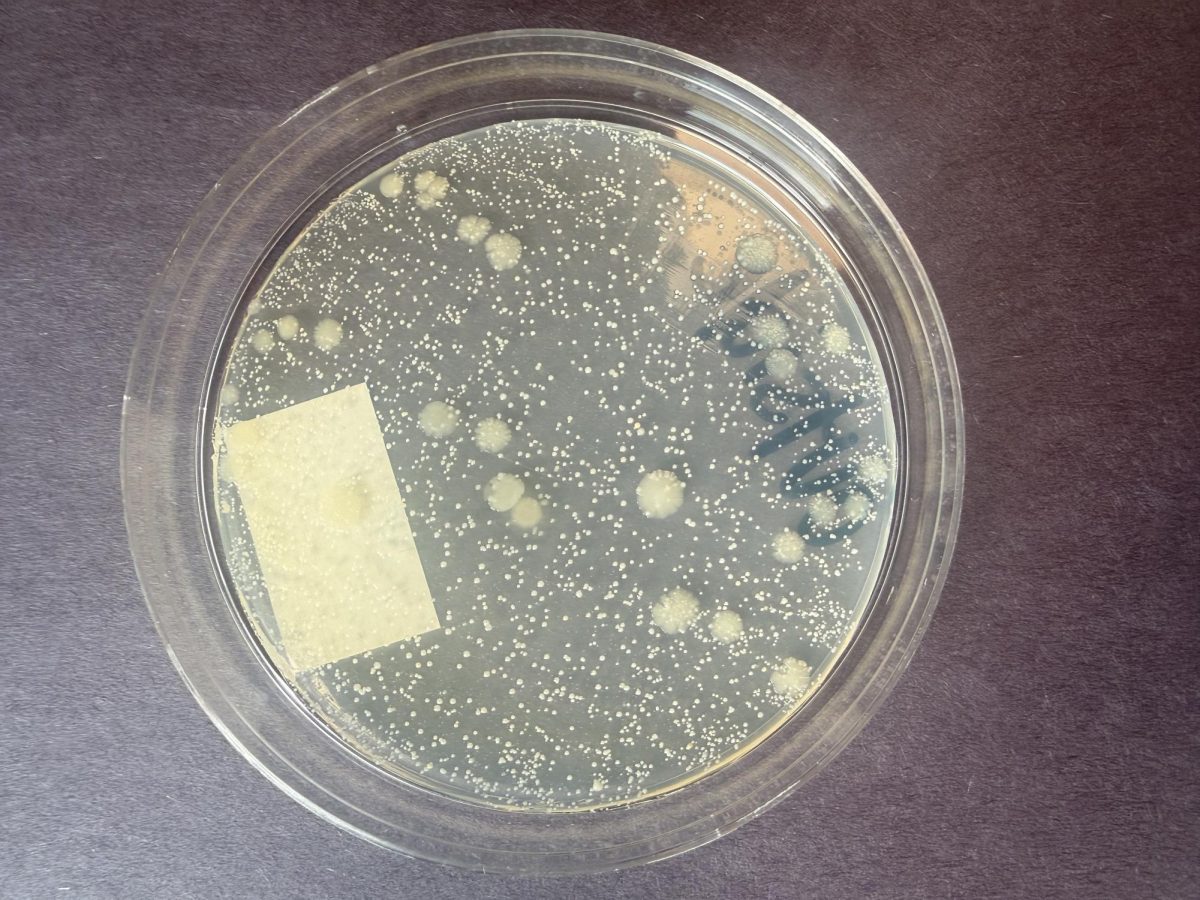
Not long after receiving the vape, Wallace began the process of identifying and growing bacteria. She first sterilized her equipment using a Bunsen burner to eliminate any existing contaminants, ensuring that any growth observed would come solely from the vape itself. She then swabbed both the inside and outside of the mouthpiece multiple times, carefully spreading the samples across a nutrient-rich agar plate. This was placed in an incubator at approximately 20 degrees Celsius for 48 hours to allow the bacteria to reproduce and form visible colonies. Once this was finished, she took proper safety precautions to sterilize all equipment again and guarantee that any excess bacteria were killed and all materials were disposed of.
The results left her both astonished and disgusted, not being what she anticipated. The amount of bacterial growth far exceeded her expectations, even producing signs of fungi. She said, “The fact that there was that much growth from our first plate was wild,” comparing it to controlled lab experiments where bacteria such as E. coli typically do not grow nearly as aggressively. Although the exact types of bacteria could not be identified without a specialized lab, Wallace emphasized that the presence of such growth is concerning. Bacteria and fungi introduced directly into the lungs can lead to serious health issues, including bronchitis, asthma complications, and even pneumonia.
Wallace explains, “People are trying to hide them, which makes them even more unclean.” She added that using someone else’s vape, especially in environments like school bathrooms, can significantly increase the risk of spreading bacteria.
The experiment also challenges a common belief among students that vaping is a safer alternative to smoking. While it may avoid some of the chemicals found in traditional cigarettes, Wallace’s findings highlight an often overlooked risk, which is the direct introduction of bacteria and fungi into the body. When asked what message students should take away from the experiment, Wallace stated, “Be careful what you put your mouth on.” She stressed that while quitting may be difficult for some, being aware of hygiene and risk is critical.
Despite sharing these results with her students, staff, and even school officials, Wallace acknowledges that changing behavior is not easy. “A lot of students are fully committed to it,” she said. “They see it as more of a fun experiment than something that’s going to cause change.” Still, she hopes the visual impact of the bacterial growth will leave a lasting impression.
Finding vapes in school, she noted, is extremely common, saying “we’re in our own little petri dish here.” She adds on, saying, “We as teachers are driven to connect students,” emphasizing the importance of bringing real-world issues into the classroom to make learning meaningful and better understood, as students prefer relevant topics.
“It’s not as safe as you think. There are side effects–there are always side effects,” She said, hoping students will remember that anything entering the mouth is entering the body, and with that comes real risks.