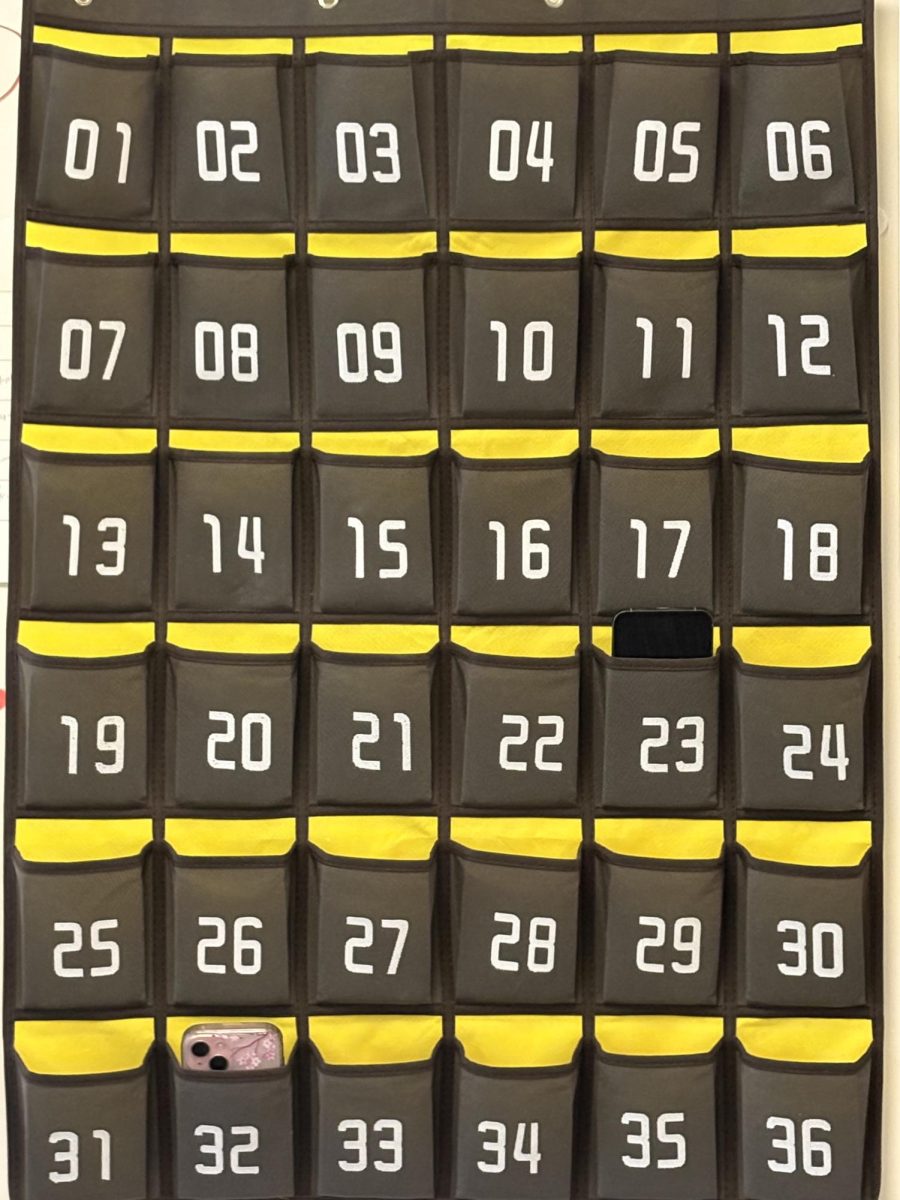
At Wyoming High School, the cell phone policy is unclear and inconsistent, and students frequently sneak their phones out.
Many teachers struggle with students who are constantly on their phones, with some implementing the caddy policy, where students put their phones in the caddy at the beginning of class, and others allowing them to stay in students' backpacks or pockets. This disrupts the classroom with argument and disorganization, affects students' work and participation, and negatively impacts overall understanding of the subject being taught. Cell phones are a major distraction, and the policy put in place in Wyoming is too flexible, creating disobedience between students and their teachers.
Many students reported that in most cases, they do not put their phones in the caddy unless a teacher is uncompromisingly strict. “Most of the time, I have family things going on,” Madison Dehaan stated. “I also have a sister who’s in the army, and I need to be able to answer her calls.”
Several other students admitted to feeling more comfortable if they have their phone, especially to communicate. “I like being able to listen to and change my music, and I want to have the opportunity to contact people if needed,” junior Lily McKenney said.
As young adults, students want to feel respected and valued. Many complained that teachers who enforce the policy are on their phones during class, which frustrates them.
“If we can’t have it, then neither should you,” Dehaan proclaimed. She believes that there should be mutual respect, and many more students would listen if they felt that there was.
Miah Mendez-Ortega agrees. “If we have to have our phones in the caddy, then they do too,” she said. ”Many teachers are on their phones when they say we can’t be on ours.”
Students are more likely to do as told when teachers provide them with freedom and an opportunity to make the right decision. English teacher Mr. Cornell added on to this, explaining, “If the expectation is that the kids don’t have their cell phone, then you shouldn't be on your cell phone.”
Alongside being valued, students communicated wanting to feel safe in case of emergencies and potential threats. “I want to have my phone with me in case something happens.” Alyssa Baker explained. “If I know it’s on me, I’ll feel better.”
Miah Mendez-Ortega is concerned about theft, saying, “I feel like students will grab my phone, I’d rather just put it in my backpack.” There have been phones stolen and lost in the past at Wyoming High School, which makes this a valid concern for students.
When it came to the best and most successful policy for students to help them and best set them up for class, answers varied. Miah would rather keep it on her, but when there are tests. “For PSAT, where we have to have all our electronics gone – I think we should have it like that for normal tests, so people don’t cheat,” she said.
Alyssa has the same mindset, claiming that she would like to be allowed to have it during work time, and that the caddy can be in use during tests. Cheating has become common and normalized, and is a valid concern created by use of electronics, specifically phones.
“The best thing for me as a student would be if there were an understanding of the school rule to not bring your phone to school,” Mr. Cornell believes.